The Render Challenge
The ArchVizDaily Render Challenge
A free monthly themed competition for architectural visualization. One image per edition, judged the same way the Weekly Crit scores work: light, materials, composition, and brief response. The winning render earns a permanent feature page on this site, which means a written breakdown of your work at a URL that keeps ranking for your name long after the edition closes.
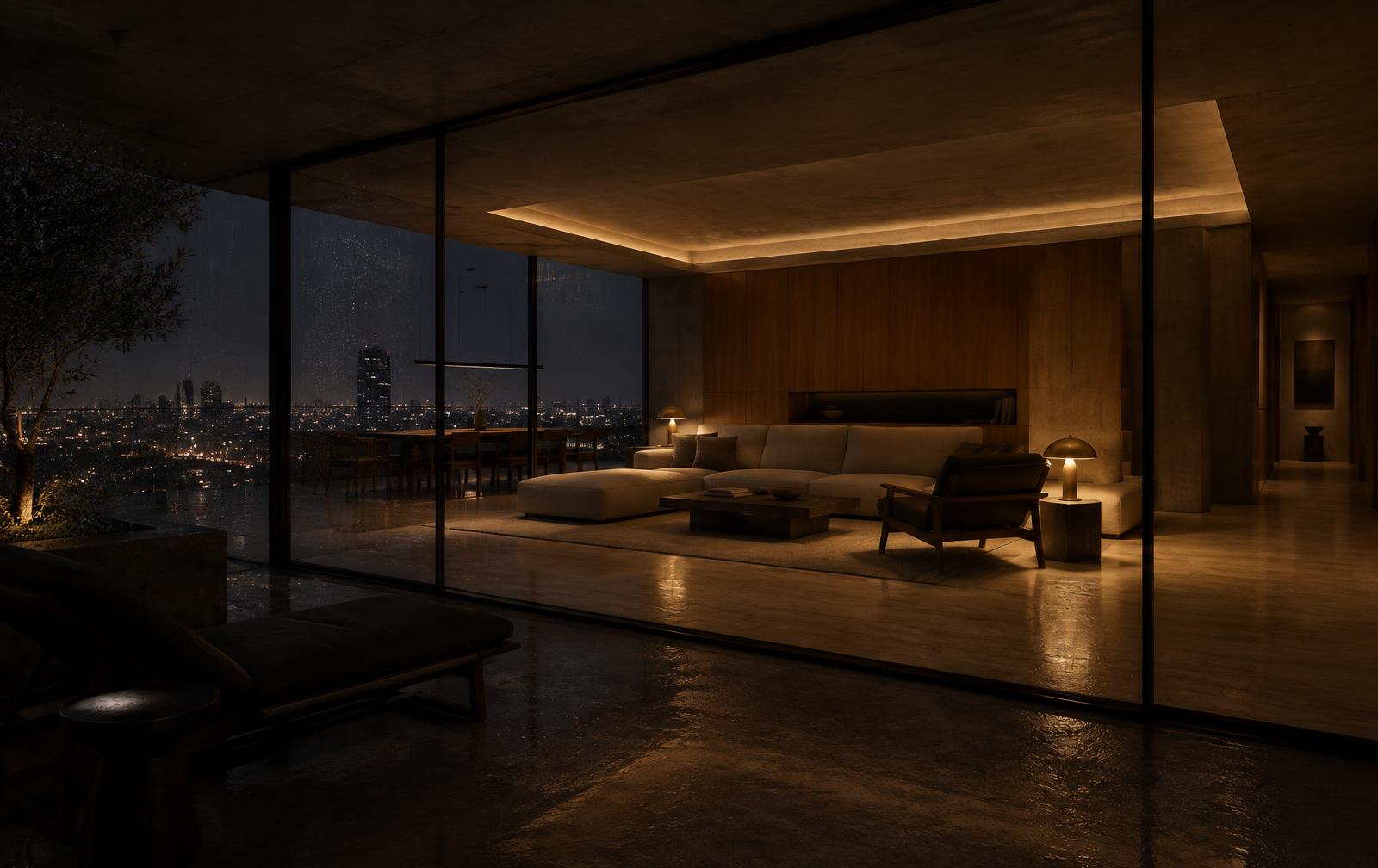
Edition 01: Nightfall
Produce one still of a single interior space after dark. The fixtures, the colour temperature, and the light levels are yours to choose: a 2700K reading corner lit by one lamp, a 3599K gallery washed by cove lighting, a workshop under cold linear fittings. What the edition tests is whether you can hold a night scene together with light alone, without daylight doing the structural work for you.
Exterior views through glazing, courtyards, and adjacent darker spaces are allowed. The judged frame is the interior. One image per artist, JPG or PNG, at least 3000px on the long edge.
- Opens
- 20 October 2026
- Closes
- 30 November 2026, 23:59 UTC
- Shortlist
- Early December 2026
- Winner
- 15 December 2026
What winning actually gets you
Most arch viz awards give you a logo and a line on a longlist page. The Render Challenge is built around something more useful for a working artist: a permanent, well-structured page about your render, on a domain that publishes daily, that explicitly links back to you.
A permanent portfolio feature page
The winning render gets a full editorial feature at its own address on archvizdaily.com: the image at full resolution, a pass-by-pass breakdown of how it was made, and your statement in your own words. Pages like this are the ones that surface when a recruiter or a potential client searches your name, and the link from that feature to your own portfolio is the kind of citation search engines treat as a recommendation.
Homepage and announcement placement
The winner leads the homepage for the month after the announcement and is the centrepiece of the edition's results post, alongside the shortlisted entries.
A written breakdown you can link to
The feature reads like the site's render breakdowns: engine, lighting passes, material decisions, post work. It doubles as a piece of portfolio documentation you can send to studios instead of a bare image link.
Shortlisted artists are credited by name
Every shortlisted entry is named and linked in the results post. Shortlist mentions are permanent too, not a page that quietly disappears after the season.
How entries are judged
Light
Direction, balance, and what the light is doing for the architecture. A night brief lives and dies on how well you place the fixtures you are pretending exist.
Materials
How surfaces read at close range: roughness, reflection, edge wear, and the difference between a texture and a surface.
Composition
Camera height, focal length, framing, and whether the image has one clear argument rather than four competing ones.
Brief response
Editions are themed for a reason. The strongest entry is not the loudest image, it is the one that answers the brief with intent.
The criteria are the same four the Weekly Crit board works from, so if you want a rehearsal, put a work in progress through the Weekly Crit first and let the community scoring tell you where the image stands before you commit it.
The rules
- One entry per artist per edition. Choose your strongest frame.
- JPG or PNG, at least 3000px on the long edge. Clay or wireframe passes are welcome but optional.
- The scene must be modeled, lit, and rendered by you. Fully generated images without a rendered scene are not eligible.
- You must own the rights to the image. Client work under NDA, and renders that infringe someone else's IP, are out.
- Your name on the entry is the name we publish. Make sure the spelling is the one you want ranking.
- Submitting grants ArchVizDaily permission to publish the entry in challenge coverage, credited to you. All other rights stay with you.
- Entries close at 23:59 UTC on the closing date. Late entries roll into the next edition.
Questions artists actually ask
How much does it cost to enter?
Nothing. The Render Challenge is free to enter, one image per artist per edition. We would rather see one considered entry than six rushed ones.
What exactly does the winner get?
A permanent portfolio feature page on ArchVizDaily, built like an editorial article: the image at full resolution, a written pass-by-pass breakdown of how it was made, an interview-style statement in the artist's own words, and a link to the artist's portfolio or studio site. That page stays up indefinitely and is structured to rank for the artist's name. The winning render also leads the homepage and the monthly announcement.
Who owns my image after I enter?
You do. Submitting grants ArchVizDaily permission to publish the entry in the challenge announcement, the shortlist, and the winner's feature, credited to you. We do not claim broad usage rights beyond challenge coverage, and client work under NDA should not be entered.
Is AI-assisted work allowed?
There has to be a render underneath: a modeled, lit, and rendered scene you made. Post-processing and AI-assisted cleanup are fine. Fully generated images without a modeled scene are not eligible, and if a jury member asks how an image was made, you should be able to show a clay or wireframe pass.
How is the winner chosen?
The ArchVizDaily editors score every eligible entry on light, materials, composition, and brief response, then discuss the top images the same way the Weekly Crit board does. If the top scores are close, the entry that most clearly answers the brief wins.
When are results announced?
The shortlist is announced early in the month after entries close, and the winner's feature publishes mid-month. Edition 01 closes on 30 November 2026, with the winner announced on 15 December 2026.
Why we run it
The industry's existing awards do an honest job for people already inside it, but entry fees and closed juries leave a lot of strong work unseen. A themed, free, monthly brief is closer to how client work actually arrives: a constraint, a deadline, and one frame that has to argue the whole project.
And because the prize is coverage rather than cash we cannot manufacture, every edition produces something durable: a written record of how good images are built, filed next to the site's render breakdowns and breakdown articles.