Workflow · Blender 4.3 + Cycles X
Blender and Cycles for arch viz: a forest pavilion, start to finish
Cycles X, geometry nodes for foliage, and the render settings that closed the gap with Corona on this small brutalist project.
 WORKFLOW
Blender in 2026 is a real arch viz tool, and pretending otherwise is a business mistake. The pipelines are mature, the render engine is genuinely fast, and the license model means you can staff up without a spreadsheet full of subscription line items. What Blender still does not have is the muscle memory of a room full of 3ds Max artists, and that is what this walkthrough is trying to short circuit.
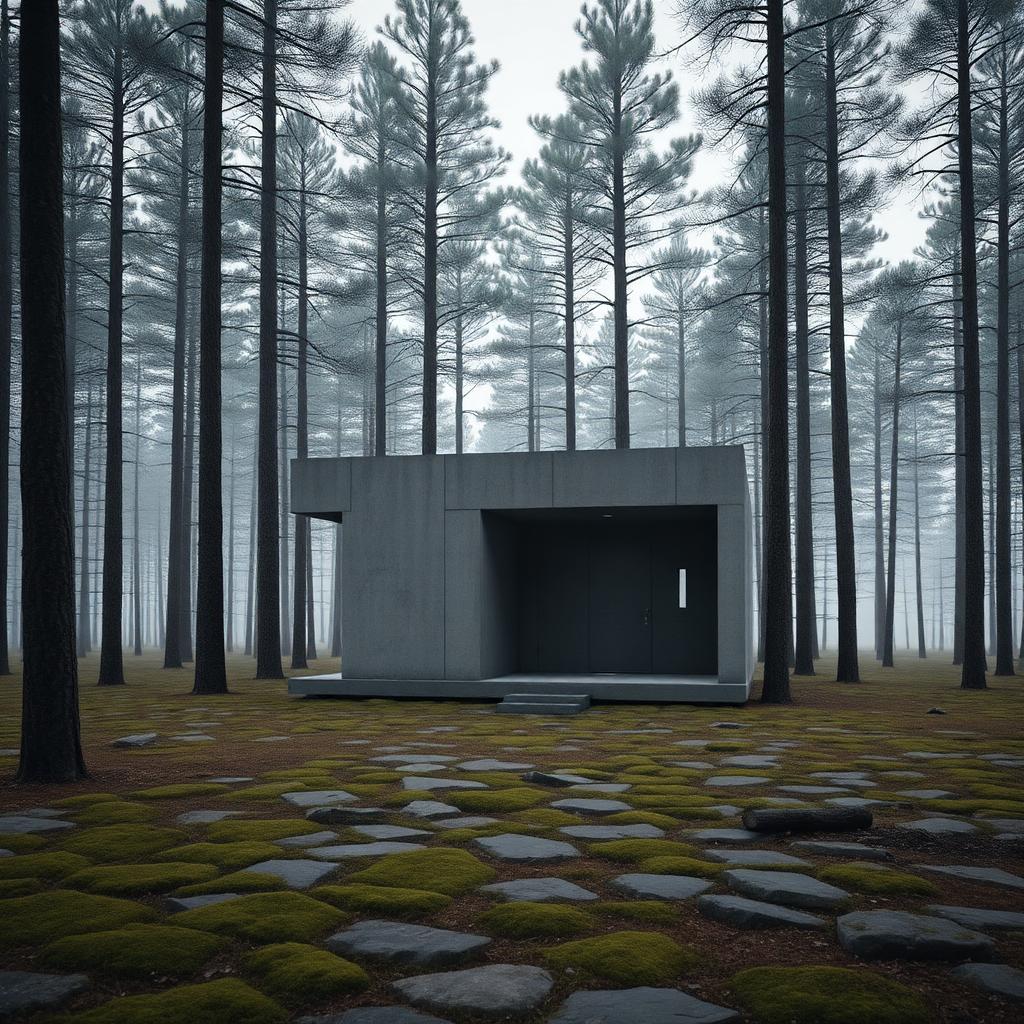
For this pavilion, everything upstream of Cycles was standard. Modeling in Blender, materials in the Principled BSDF, camera framing worked out with the viewport shading set to Rendered so I could see Cycles noise in real time. The one non obvious choice was setting the color management view transform to AgX. Filmic is still fine, but AgX handles the highlights on wet moss and polished concrete in a way that took an hour of grading to match under Filmic.
Foliage is where Blender pulls ahead of a lot of paid pipelines. Geometry nodes let you scatter the pine trunks based on a weight paint, cull anything below a certain slope angle, and vary rotation and scale per instance without touching a modifier stack. The scatter for this scene is one node group, reused three times with different inputs for canopy, undergrowth, and moss patches on the ground.
Cycles X settings that closed the gap for me: adaptive sampling on with a noise threshold of 0.01, maximum samples at 1024, and the OpenImageDenoise on prefiltered mode for the final. Light tree on, which is the setting most tutorials skip and which single handedly halved my render times on scenes with more than about fifteen lights. If you are still on branched path tracing habits from Cycles classic, unlearn them. Cycles X wants uniform samples and a decent denoiser, nothing more.
The post work on this shot was almost nothing. A very mild color grade in the compositor, a Z pass driven mist pass at low density, and a subtle bloom on the door threshold light. When people ask why the render looks calm rather than dramatic, the answer is that the light does the work and I let it. There is a maturity to knowing when to leave the compositor alone, and it takes about ten years to learn.