Interiors · V-Ray 7
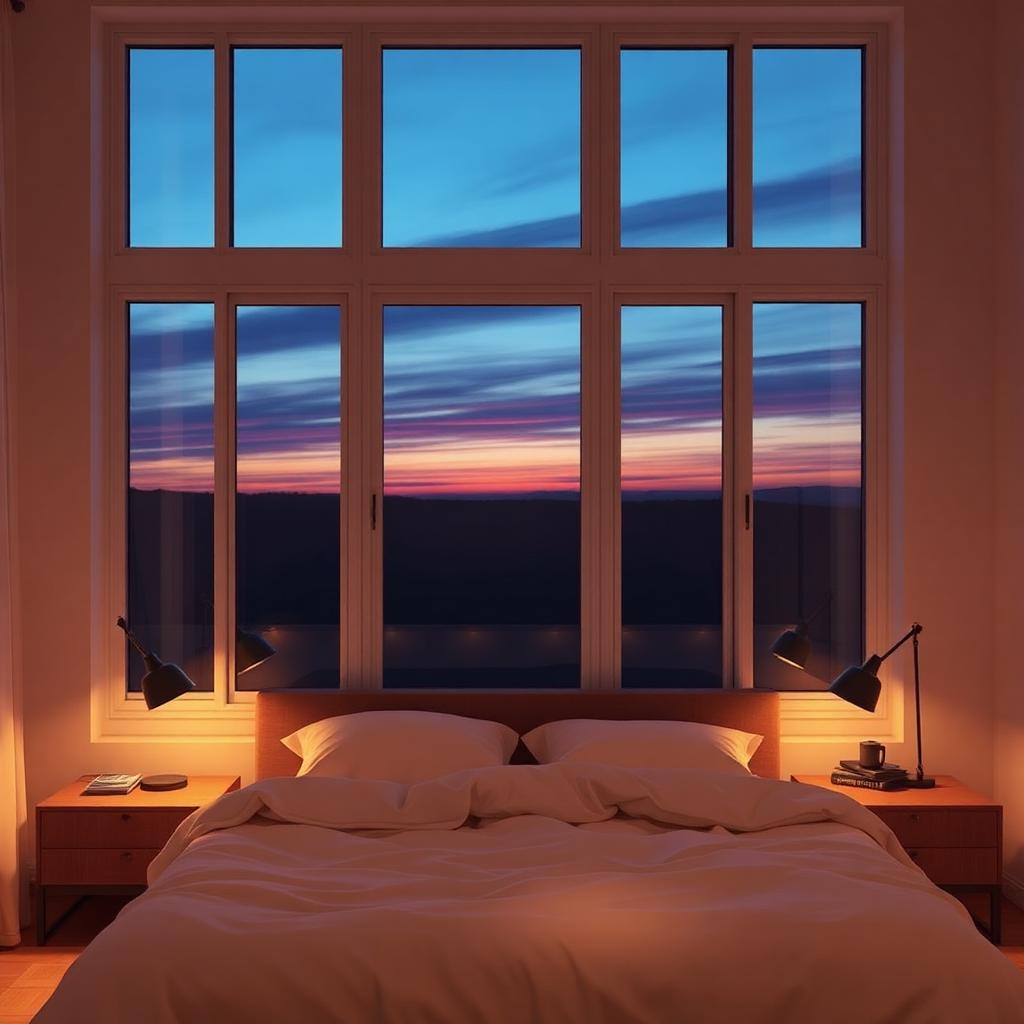
Bedroom renders at dusk: the two light source composition
Sky in one temperature, bedside lamps in another, and nothing else. A quiet dusk bedroom study in V-Ray with a full lighting breakdown.
 INTERIORS
There is a specific hour in every day when a bedroom photographs beautifully. It is the moment after the sun has dropped below the horizon but before the sky has gone fully black, and the bedside lamps have been switched on but the ceiling lights are still off. This condition, roughly civil twilight at around 8:15pm in summer or 5:15pm in winter, is what this render is chasing. Everything else in the frame flows from that decision.
The lighting for this shot is two sources. The sky through the window, and two bedside lamps. That is it. No overhead lights, no additional fill, no ambient adjustment. The reason this reads as calm is precisely because the light sources are few and their temperatures contrast. Every additional light I could add would push the scene closer to product photography and away from the bedtime feeling that makes the frame work.
The sky exposure is critical. At civil twilight the sky is roughly 6600K and about EV 8, which is dim by daylight standards. Set the environment to a captured dusk HDRI at these values, or dial a procedural VRaySky to the equivalent state. Do not underexpose the sky to make the interior look brighter. The whole point of dusk is that the outside is dimmer than the inside, and that contrast is what makes the room feel enveloping.
The bedside lamps carry the emotional weight. Two rectangular VRayLights placed inside the lampshades, colour temperature 2400K, intensity around 200 lumens each. That is very low by daylight comparison but exactly right for a real bedside lamp. Higher intensity and the room starts to look like a hotel showroom. Lower and the lamps stop reading as switched on.
The bed linen is where a bedroom render either feels lived in or staged. Layered linens with subtle wrinkles, one throw draped diagonally, a small crease where someone has just sat down. Do not iron the sheets in the render. A perfectly smooth bedspread reads as furniture store display. A slightly rumpled one reads as a room someone lives in. Cloth simulation is optional for these details, hand modelling the wrinkles is often faster and gives you more control over which wrinkles you keep.
For material response in low light, be careful with saturation. Colours that read as neutral under daylight will look grey under dusk warm interior light. If your walls are meant to read as warm cream, they may need to be authored a shade warmer to survive the low colour temperature light. Test with your lights on before committing to material choices.
The window frame catches light from both sides in this composition, warm from the bedside lamps on the interior face and cool from the dusk sky on the exterior face. This dual temperature edge is one of the small details that sells the frame as photographed. It happens naturally if you have not added extra fill lights that would flatten the contrast, which is another reason to hold to the two source rule.
Reflection on any glossy surface in a dusk bedroom becomes a small window into both light sources. A polished bedside table reflects a smear of warm lamp and cool window. A mirror on the wall opposite the window catches the sky. These small reflection moments are what makes the room feel dimensional. Do not fake them with additional lights, let the reflected sources do the work.
The last note is about narrative. A bedroom render should suggest recent human presence without showing a person. A book left open on the sheets. Slippers by the bed. A glass of water on the nightstand. These artefacts turn a rendered space into an inhabited one. Empty renders of bedrooms feel like hotel rooms. Slightly disordered ones feel like bedrooms.