Workflow · Any renderer
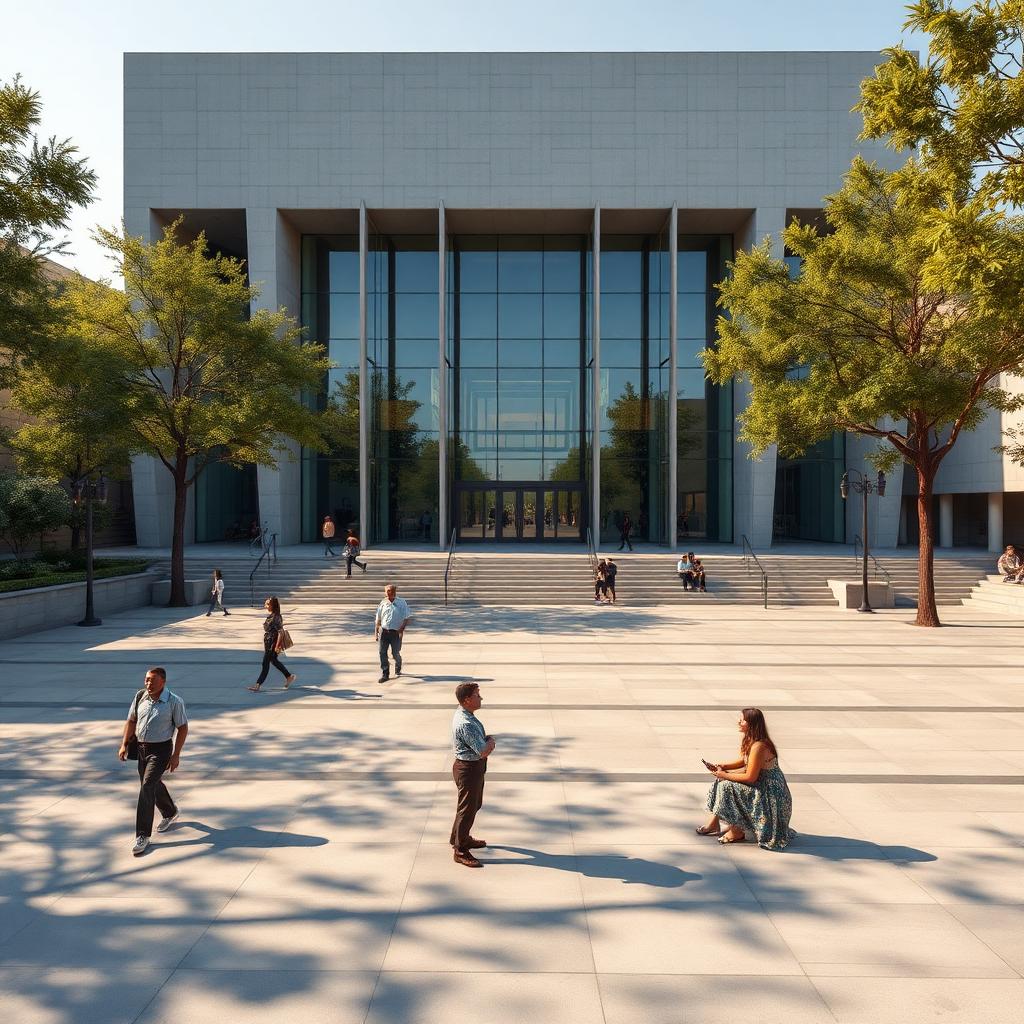
Entourage people that add life without adding noise
Cutout versus 3D, silhouette reading, and the awkward mid distance zone where every render's people become obviously fake. A working method.
 WORKFLOW
The people in a render are the fastest way to communicate what a building is for. A museum with a solo elderly visitor reads differently to a museum with a school group. A residential courtyard with a couple pushing a pram reads differently to the same courtyard with three teenagers on skateboards. Casting the entourage is a design decision, not a decoration decision, and it deserves the same care you would give the material palette.
The first mistake most artists make is treating entourage as fill. If a shot has empty space, drop a person there. This gives you renders that read as evenly populated in a way that no real space ever is. Real spaces have clusters. People gather where there is shelter, seating, food, or a reason. Read the space you are rendering and place people where the space itself would invite them.
For technical approach, mix cutout billboards with 3D scanned models. Cutouts are much faster to render and lighter to work with, but they only hold up at longer distances and specific angles. 3D scanned models are heavier but survive close inspection. The rule I use is any figure closer than 8 metres to camera or larger than 20 percent of the frame height should be 3D. Everything else can be a cutout.
Silhouette is the property that determines whether an entourage figure works. If the silhouette reads as a person from a squint distance, the figure works. If the silhouette is ambiguous or blob like, it does not. Rotate your figures so their outline against the background is legible. A person facing directly toward or away from the camera loses silhouette. A person at three quarter angle reads clearly.
Age and behaviour diversity matter more than model diversity. Ten copies of the same walking businessman is a bad entourage. One walking businessman, one couple pushing a pram, one elderly person with a cane, one child running, and one seated figure reading is a good entourage even if all five come from the same asset library. What the eye reads is the variety of poses and body types, not the specific model identity.
Shadow consistency is where fake entourage gets caught. Every scanned or cutout figure was photographed under a specific light. If your scene lighting does not match, the figure will visibly float. The two fixes are to relight the cutout in post using a light wrap, or to select entourage assets whose original lighting matches your scene direction. For hero shots, spend ten minutes on this. For quick review renders, accept the mismatch and move on.
The awkward mid distance is where entourage renders fail most often. Figures at 4 to 8 metres from camera are large enough to demand detail but usually not the focus of the shot. Cutouts start looking flat, 3D models start eating render time, and the eye lands on them exactly because they are ambiguous. The solution is either to obscure them slightly with foreground elements, or to redesign the composition so the mid distance is empty and the people are either close or far.
For urban plazas specifically, populate by activity zone. Seated figures near planters and edges, walking figures on desire lines, standing figures at meeting points such as café entrances. Randomly scattered pedestrians look like a Sims screenshot. Deliberate clusters look like a photograph.
The last note is a portfolio one. Build a library of ten to fifteen scanned figures you have selected personally for how they render. Every asset library has hundreds of poor figures and a dozen good ones. Curate ruthlessly, and your entourage across projects will start to have a recognisable voice that becomes part of your studio look.