Real-time · Unreal Engine 5.5
Twilight interiors in Unreal Engine 5: Lumen without the noisy first minute
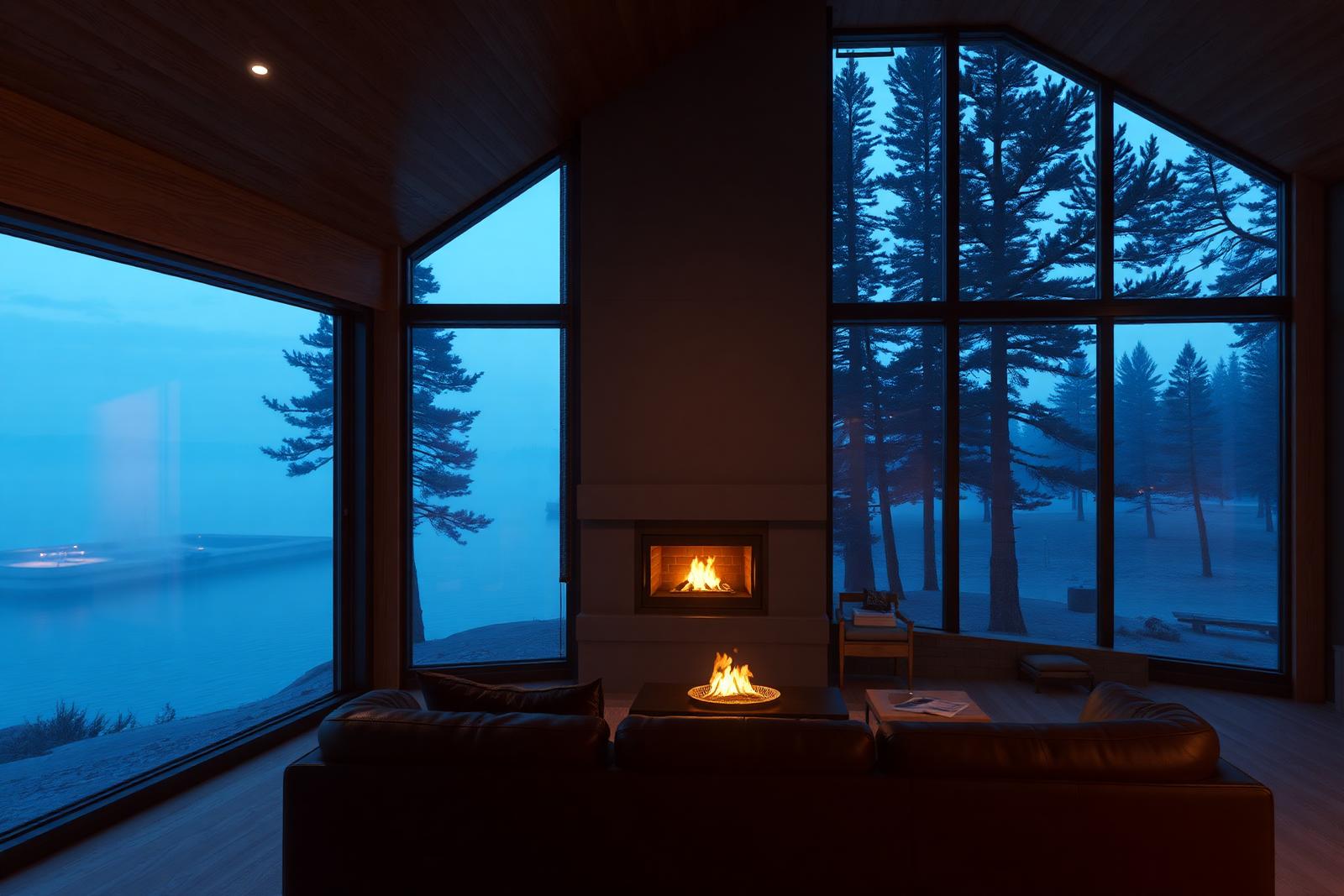
A calm lakeside cabin scene, lit with Lumen at civil twilight. The console commands and post process tweaks that keep the GI stable when the light is barely there.
 REAL-TIME
Twilight is the light condition Lumen struggles with most, because there is almost no directional signal for it to sample. The sky is dim, the sun is below the horizon, and 80 percent of your interior GI is now coming from a couple of practical lights and a fire. The first minute of any twilight scene in UE5 will look noisy, splotchy, and honestly quite bad. That does not mean the setup is wrong.
Console commands I run before I judge anything. r.Lumen.ScreenProbeGather.RadianceCache.NumFramesToKeepCachedProbes 8 stabilises the low light temporal filter. r.Lumen.Reflections.ScreenTraces 1 and r.Lumen.Reflections.HitLightingForReflections 1 clean up the interior reflections on the picture window without going full hardware ray tracing. On my RTX 4080 this scene sits at about 42fps in editor with these on, which is fine for lookdev.
The fireplace is doing most of the work here, and it is a single rect light at 1900K with a small emissive plane in front for the visible flame. Keep the light itself off the visible flame geometry, otherwise Lumen double counts and the mantle above cooks. Intensity on the rect light is around 800 lumens, which sounds low, but a real gas fire in a room this size is genuinely dim.
Post process wise, the temptation at twilight is to crank the auto exposure and let Unreal find the picture. Do not. Lock the exposure at EV 8.5 to 9, which is roughly what a real camera would meter at this hour. The scene should feel low key. If your renders look bright and balanced, you have made a night scene lit by a movie lighting crew, not a real cabin.
For the mist across the lake, I used a simple exponential height fog with a subtle blue tint and second layer at very low density to catch some godray behaviour off the fireplace glow through the window. Volumetric fog in twilight scenes is one of the few places where Unreal genuinely looks better than a still frame from Corona or V-Ray, because it evaluates properly at real world scale.
The reason to build this in UE5 rather than a path tracer is not the render time, which is comparable now for stills. It is that the client can walk into this room in headset and feel the twilight. When they say oh, the fire is warmer than the pendant, that is the moment archviz stops being a picture and becomes a design conversation. Twilight is the light condition where that shift happens fastest, because it is the light condition people are most emotionally attached to.