Breakdown · V-Ray 7
Overcast urban renders in V-Ray: why grey skies sell better than sunshine
Competition boards keep losing to sunlit hero shots that do not reflect the actual site climate. A defence of overcast urban visualization, with the V-Ray dome setup I use for it.
 BREAKDOWN
Every studio has that one project where the client picked the sunlit render for the winning board and the built version now sits under six months of grey sky per year. Overcast visualization is unglamorous, harder to sell internally, and almost always more honest. It is worth learning to do well.
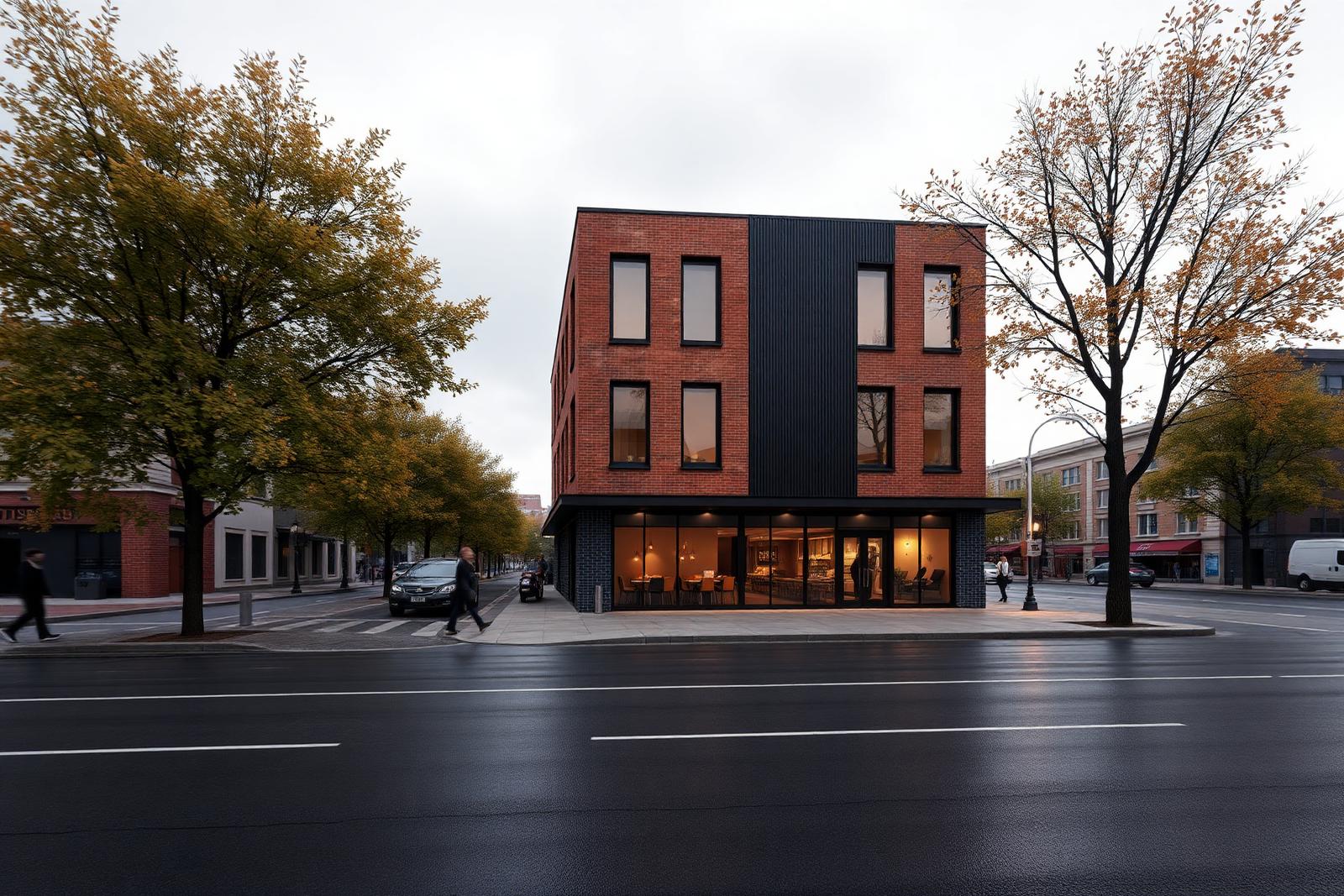
The setup I use starts with a dome light and a real overcast HDRI, not a procedural CoronaSky or VRaySky in overcast mode. Captured HDRIs carry the tiny gradient bands that make wet asphalt read as wet, and the subtle warm patch where the sun almost breaks through. Procedural overcast skies are too clean. They look computed, because they are.
Ground reflectance is the trick most people miss on overcast work. When the ground is wet, real reflectance goes up by two to three stops depending on the material. I add a subtle water puddle map to the asphalt through a VRayBlend material at around 15 percent, with a slightly rougher fresnel than glass. The reflections should smear, not mirror. If your building is reflecting sharply in the road, you are rendering a car park after a rain, not a street.
For the trees, autumn HDRI plates and autumn foliage do the emotional heavy lifting on overcast frames. Cool sky plus warm leaves creates the tension that stops a grey render from looking like a grey render. I keep the leaf saturation about 20 percent below where I think it should be, because the human eye reads restrained autumn as more real than the vivid version.
The exposure story: EV 11.5 to 12 for full overcast, not the EV 13 you would use in direct sun. Underexposing by half a stop from truth also helps the interior lights inside the ground floor cafe read as inviting rather than incidental. This is the reason overcast shots often feel more cinematic than sunlit ones. You have permission to let interiors glow.
One political note, because it matters. When you present overcast renders next to sunlit ones from the competition, name the weather explicitly on the sheet. Something like Overcast 8am, October, 68 percent cloud. Clients respond well to that specificity. It signals that the render is a study, not a sales tool, and it protects you when someone asks why yours does not look like the other consultant's brochure shot.