Lighting · Corona, V-Ray
Rendering courtyards and semi enclosed spaces without them looking dark
Courtyards are lit from a slot of sky, not a hemisphere. That single fact is why 80 percent of courtyard renders look muddy. Here's how I solve it.
 LIGHTING
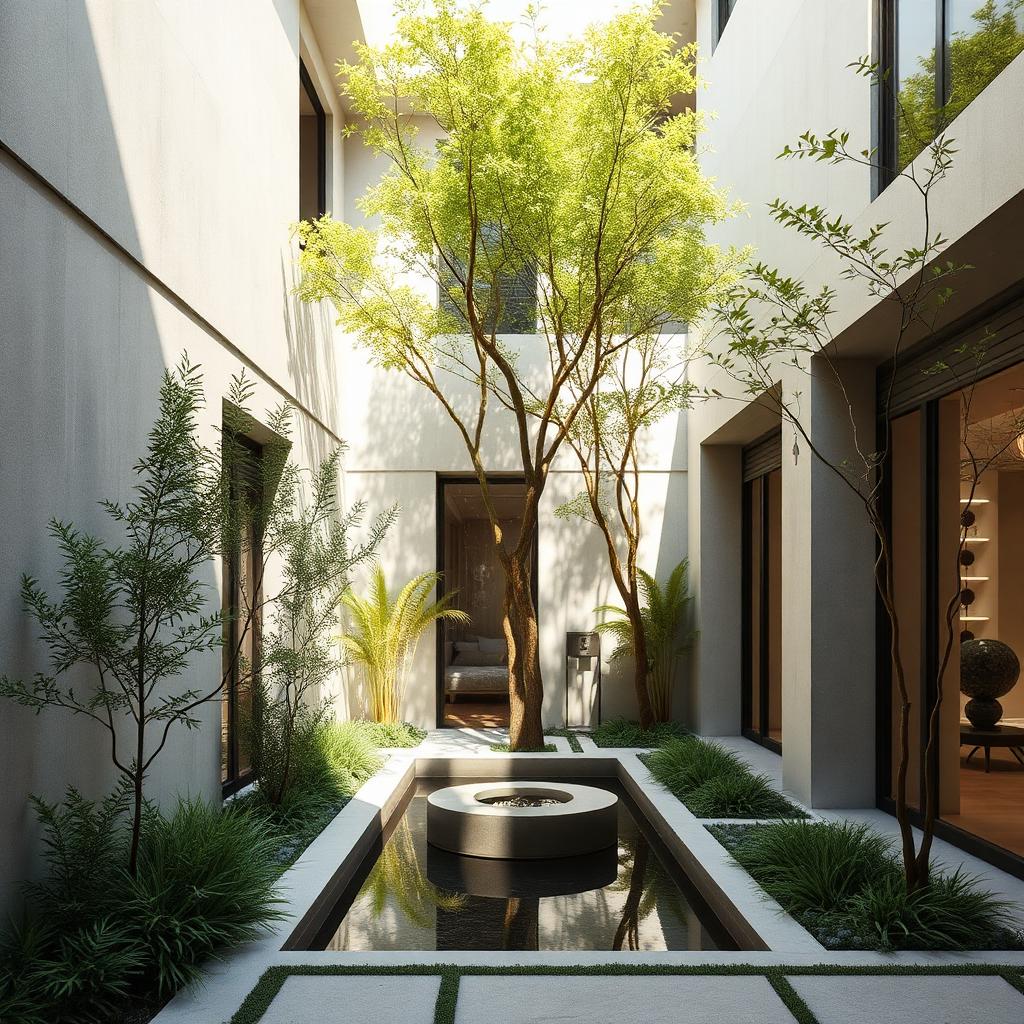
The first courtyard I ever rendered came out looking like a prison yard at 4 am even though I had it set to noon with clear sky. It took me embarrassingly long to figure out why. The reason is simple in retrospect but nobody had told me. A courtyard is not lit by the sky dome. It is lit by whatever slot of sky it can actually see from the ground. If the walls are 6 meters tall and the courtyard is 6 meters wide, the ground can see maybe 40 percent of the hemisphere. Your GI has to work four times harder just to get to daylight brightness, and it usually can't.
The fix I use now on every enclosed or semi enclosed scene is a large fill light plane above the courtyard, sized to the opening at the top and positioned about half a meter into the sky. In Corona this is a rectangular light with color set to daylight white, intensity around 40 to 80 depending on the size of the opening, and directionality left at zero. In V-Ray it is a plane light with a similar setup, no invisible option because I want it to also contribute to reflections in glazing.
The fill light plane sounds like a hack but it is actually a physical model of what is happening. The sky is a big soft light and when the courtyard blocks 60 percent of it, you are effectively reducing sky illumination by 60 percent. Replacing that missing illumination with a fill plane at the opening gets you back to daylight without cheating the physics, because the physics were already limiting you.
Sun angle matters more in a courtyard than in an open exterior. If the sun is coming from an angle that puts the courtyard entirely in shadow, no amount of fill light will make it feel sunny. It will just feel bright. I always pick a sun angle where at least one wall receives direct sun and casts a real shadow across the courtyard floor. This gives the image a sense of time and warmth. Even a small triangle of direct sun on the far wall changes the whole image.
Bounce light from surrounding surfaces is where a courtyard's atmosphere comes from. White walls will fill the space with cool light, warm stone walls will fill it with amber. This is one of the few times I recommend leaning into slightly saturated wall materials because they will bounce their color into everything else. A wall with 15 percent saturation red brick will make the shadow side of a table in the courtyard glow warmly. This is what real courtyards feel like. Grey walls give you the prison yard feeling I started with.
Materials in courtyards need less contrast than materials in open exteriors. Because everything is receiving softer light with more bounce, high contrast textures like heavily grouted brick or dark timber will read as busy. I dial back the material contrast about 15 percent for courtyard shots, either in the material itself or in a levels layer on the diffuse map. The image reads calmer and more like a real place.
One thing to watch is that GI in a courtyard scene needs more bounces than you might normally use. I bump primary bounces to 3 and secondary to 32 for courtyards in V-Ray, or set light samples up two notches in Corona. The light is bouncing around inside a box and each bounce carries meaningful information. Cutting bounces too aggressively saves render time at the cost of the atmosphere you were trying to create in the first place.