Lighting · 3ds Max + Corona 12
Rendering snow exteriors: alpine cabins without the greeting card feel
Snow displacement, subsurface scattering on ice, and the fireplace glow that anchors the frame. A winter exterior breakdown in Corona.
 LIGHTING
Snow is deceptively hard to render. Not because the shader is complex but because snow has behaviour, and most renders miss the behaviour and end up with a scene that looks like a cabin dropped into a bag of flour. Real snow drifts, packs, and melts differently depending on slope, shelter, and traffic. Get one or two of those behaviours into the geometry and the snow starts reading as a landscape rather than a texture.
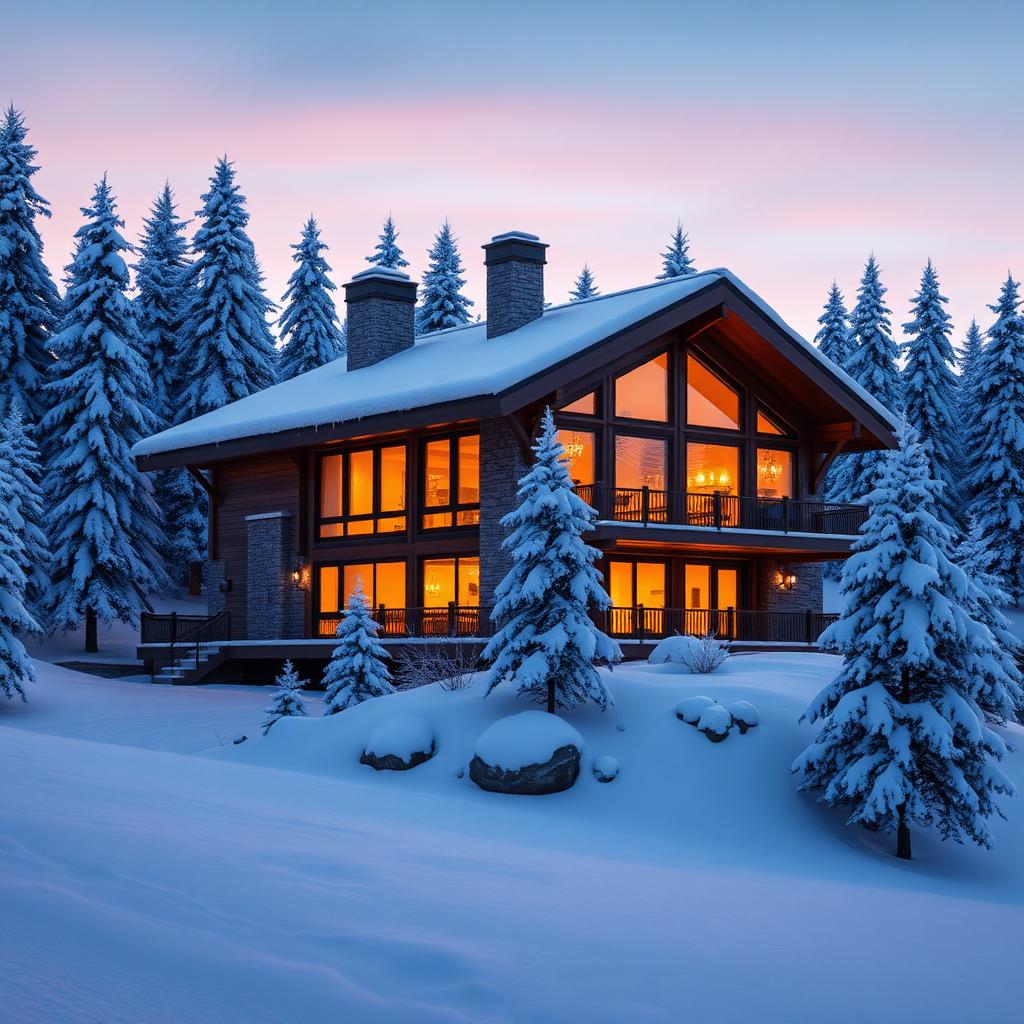
The base snow surface is a displaced ground plane. Start with the terrain modelled as if there were no snow. Add a snow layer as a separate mesh, thickness 15 to 25cm on the flat, tapering to 2 to 5cm at the exposed edges and windward faces. In this cabin scene, the snow on the roof is thicker on the north pitch than the south, because the south pitch gets afternoon sun and starts melting earlier. That single asymmetry sells the frame as a real winter day rather than a costume shot.
For the snow shader itself, do not use a pure white diffuse. Real snow is off white and has a very slight blue cast in the shadows because the sky is the dominant fill. In Corona I set the diffuse to 0.92 at a subtle warm tint, and let subsurface scattering do the work of pulling the shadows blue. SSS radius around 3cm, scatter colour pulled toward a cool blue, weight around 0.4. The result is snow that glows softly when backlit and shows realistic shadow tint under the pines.
Freshly fallen versus packed snow read differently. Fresh snow has a broken specular that sparkles slightly under direct light. Packed snow is smoother and more reflective. Use a mask that transitions between these two shaders based on where a human would have walked or driven. The path from the cabin door to the road is packed. The area under the trees is fresh. The area near the chimney is slightly stained from soot fall, which is a detail most renders skip and which grounds the whole scene in temperature.
The fireplace is what anchors an alpine dusk. Warm interior windows are the second warmest light source in the frame. The first is the fire itself, visible through the picture window as an orange flicker. Model a simple emissive plane behind the glazing at 2200K and about 400 lumens per square metre, and let it wash onto the immediate snow in the foreground. That warm wash on cold blue snow is the tension every good winter photograph carries.
For the sky, twilight in mountains reads as a soft pink to deep blue gradient with almost no warm horizon. Use a captured HDRI shot in a real alpine location if possible. Procedural skies at dusk in mountains tend to over saturate the horizon in a way that reads as fantasy rather than reality. A quiet gradient sky lets the fireplace do the emotional work.
One trap on snow exteriors is over polishing the snow surface. Real snow in a residential garden has footprints, tyre tracks, and irregular edges. If your snow reads as pristine across every square metre, the frame will look like a Christmas advert. Add one set of footprints from the door to the woodshed. Add a tyre mark on the driveway. These marks of habitation are what makes the cabin feel occupied.
The last note is about compression. Snow renders often become greeting cards because artists lean into the cliché. If the client wants greeting card, deliver greeting card. If the client wants a residential winter render for a serious architecture publication, restrain the sky, restrain the light saturation, and let the composition read as a photograph rather than a scene. The best winter arch viz images look like they were shot on a cold morning by a photographer who happened to be passing.